
Behind The Silent line
The Pitch
The Hook
We live in an age of immediacy — instant messages, instant intimacy, the relentless pressure to declare, possess, and consume. Behind the Silent Line asks a quietly radical question: what if the strongest connection is the one that never demands more than presence? It is a love story stripped of every cliché, built instead on attention, patience, and the courage to let something remain exactly what it is.
The Story
Sara is a career military officer whose authority narrows even as it rises; every decision carries weight, and failure accumulates in silence. Jonah is a harbour radio technician who has learned that some broken things respond only to patience. When they meet through a language forum, neither is looking for transformation. Their exchange begins as practical — sharpening a language, trading small repairs of meaning — and deepens into a correspondence governed by care rather than urgency.
Across three movements, the novel follows their bond through its testing. A moral argument fractures their rhythm and forces both to confront how easily understanding slips into assumption. Jonah's relationship with Elise, a perceptive literature teacher, grounds the book's exploration of dignity and non-possessive love. When proximity finally becomes possible, Sara and Jonah consciously refuse to rush toward what might break them — and when distance reasserts itself, they accept it without drama.
In its final movement, time does its patient work. Sara ascends to the highest command; Jonah ages into the limits of his own hands and closes his workshop. Their letters slow and deepen. When Jonah falls ill, he writes a final message — grateful, unafraid, complete — and Sara arrives too late. What she carries afterward is not grief alone, but the full understanding of what the silent line between them always was: not denial, but preservation.
Themes
At its heart, the novel examines endurance over intensity, clarity over confidence, and fidelity over possession. It treats restraint not as repression but as a deliberate, sustaining act — a form of love practised the way Jonah practises repair and Sara practises command: with attention, discipline, and respect for what cannot be forced. These are quietly counter-cultural ideas, and they give the book its lasting resonance.
The Market
Behind the Silent Line sits comfortably alongside the contemplative literary fiction of Kent Haruf (Our Souls at Night), Rachel Joyce (The Unlikely Pilgrimage of Harold Fry), and Anthony Doerr (All the Light We Cannot See), with the restrained emotional register of Kazuo Ishiguro. It will appeal to readers who prize atmosphere, interiority, and emotional precision over plot mechanics — and to book clubs drawn to novels that reward discussion of how we love, lead, and let go.
Why This Book, Why Now
In a culture saturated with noise and the demand for constant connection, a novel that argues for the quiet power of restraint feels both timeless and timely. Behind the Silent Line offers no spectacle and needs none. It trusts the reader, honours its characters, and lingers long after the final page — the literary equivalent of a signal that holds, faint but unmistakable, across a great distance.
Quick Reference
Genre: Literary Fiction · Quiet / Contemplative · Upmarket
Comparable Titles: Our Souls at Night (Haruf) · The Unlikely Pilgrimage of Harold Fry (Joyce) · Remains of the Day (Ishiguro)
Themes: restraint, endurance, fidelity, leadership, aging, non-possessive love
Audience: adult literary readers, book clubs, fans of quiet character-driven fiction
Tone: luminous, unhurried, emotionally precise, atmospheric
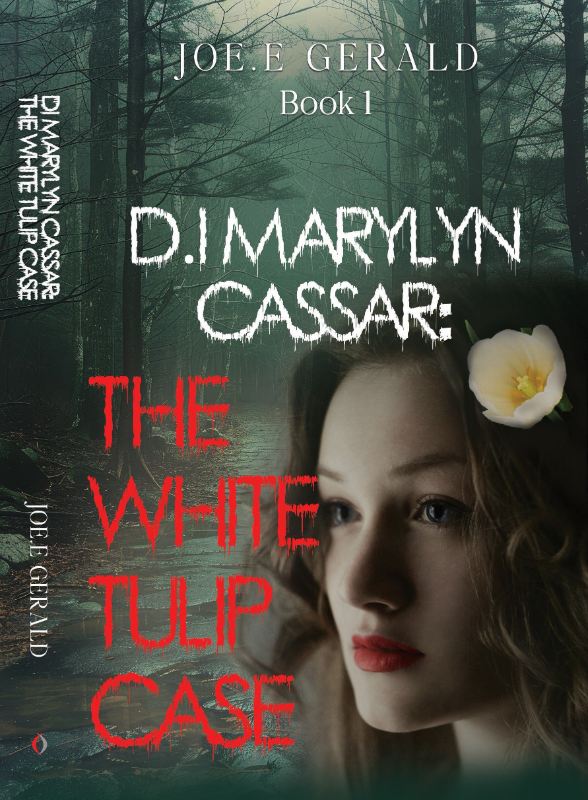
D.I. Marylyn Cassar: The White Tulip Case
D.I. Marylyn Cassar: The White Tulip Case is a character-driven crime thriller set against the evocative backdrop of Malta, introducing a sharp, determined detective whose instincts are as formidable as her intellect.
When a body is discovered bearing a single white tulip, Detective Inspector Marylyn Cassar, known as Lyn, is assigned what appears to be an isolated homicide. But the deliberate placement of the tulips suggests intention—something personal, symbolic, and deeply unsettling. Lyn follows the smallest details, trusting her intuition even when evidence is scarce.
As the investigation unfolds, Lyn navigates tense interrogations, internal pressures from superiors, and the quiet camaraderie of her team, all while piecing together a case rooted in grief, memory, and long-buried secrets. The killer is meticulous, patient, and emotionally driven—forcing Lyn to confront not only the facts of the case but the human pain behind it. As her own life is pushed into danger, a second body is discovered, marked in the same chilling manner, confirming the team’s growing fear that the nightmare has only just begun.
Blending procedural realism with psychological depth, the novel balances moments of high tension with intimate scenes that reveal the personal cost of police work. Malta’s landscapes, its coastlines, towns, and hidden corners, are woven into the narrative, creating a vivid sense of place rarely explored in crime fiction.
The White Tulip Case will appeal to fans of atmospheric, character-led mysteries who value strong protagonists, emotional complexity, and slow-burn suspense. This debut novel introduces a detective readers will want to follow far beyond her first case.
Create Your Own Website With Webador